
Raising aspirations
Since establishing in 2020, we’ve been working to raise aspirations and boost enthusiasm for STEMM for school-age students, as well as support local teachers and educators.
We now offer paid hands-on workshops for schools!
Have a look at our available workshops and check out our educational resources from our projects.
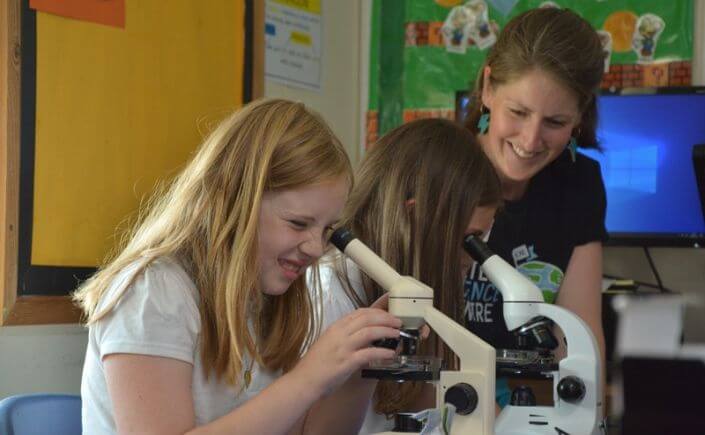
We can bring our high-quality, hands-on STEMM workshops directly to your school hall, classroom, or to community spaces for home educator groups!
Every session connects the curriculum to local research and industry expertise, and has been tried-and-tested at our many school and public events across the region.
Workshop themes:

Operation Earth
Recommended for primary or SEN secondary settings: An Earth-based exploration of ocean health, land biodiversity, and air quality. Activities include our popular biodiversity mat, infrared cameras, plant-pot making, microscopy safaris, and Earth Observation ‘spot the difference’ activities.

Our World From Space
Recommended for secondary or higher-ability year 5-6 students: We look back at Planet Earth from the perspective of satellites, covering satellite orbits and space-based environmental monitoring of our land, oceans and atmosphere. Activities include our ever-popular giant gyroscopic bike wheel, infrared imaging, spectroscopy, and life aboard the International Space Station.

No Place Like Home
Primary or secondary students: This out-of-this-world workshop explores the physics of orbits, Solar System planets, finding exoplanets (planets orbiting other stars) and understanding planetary atmospheres. This is based on the space zone of our planetary climates exhibition, created in collaboration with astrophysicists at the University of Exeter.
Available from Spring 2027:
Ocean Science
Primary or secondary students: How we affect life in the oceans – and how we can help it thrive. Featuring underwater biodiversity, the effects of climate change including ocean acidification and rising sea temperatures, ocean pollution (plastic, noise and chemical), and ways we can all get involved to help our oceans.
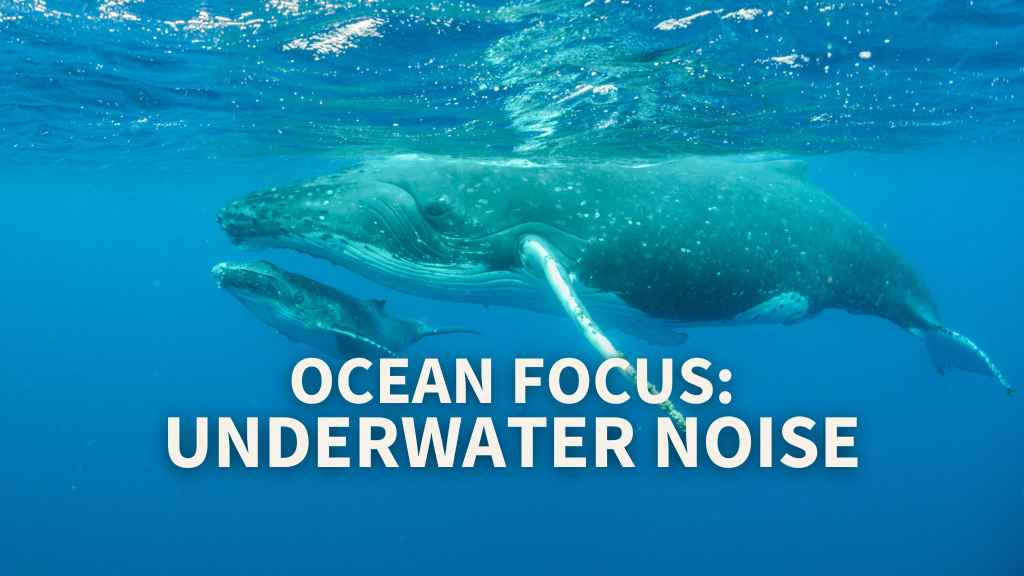
Ocean focus: underwater noise
Secondary students: A locally-relevant way to connect students with the science of sound. We explore the physics of sound waves, how sound travels through materials, how marine life uses sound to communicate – and how underwater noise affects them.
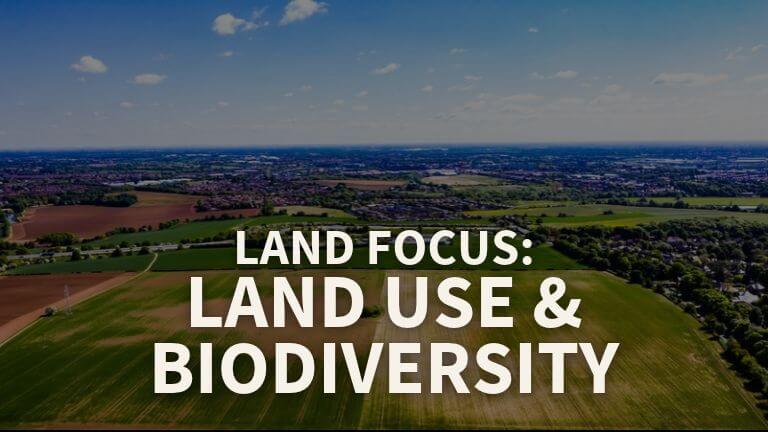
Land focus: land use and biodiversity
Secondary students: A focused session on how we use land in both the countryside and urban spaces. Covers urban greening, soil health, pollution, and sustainable food systems.
Demystifying AI
Secondary students: Our most recent programme, developed as one of 15 science discovery centres across the UK chosen to deliver it. We explore what AI is, how computers learn, how large language models (‘chatbots’) work, and how AI can be used for good. We are adapting this programme to focus on what young people need to know – including how to use chatbots with care, and how young people can ensure AI supports, rather than hinders, their learning.
Career Skills
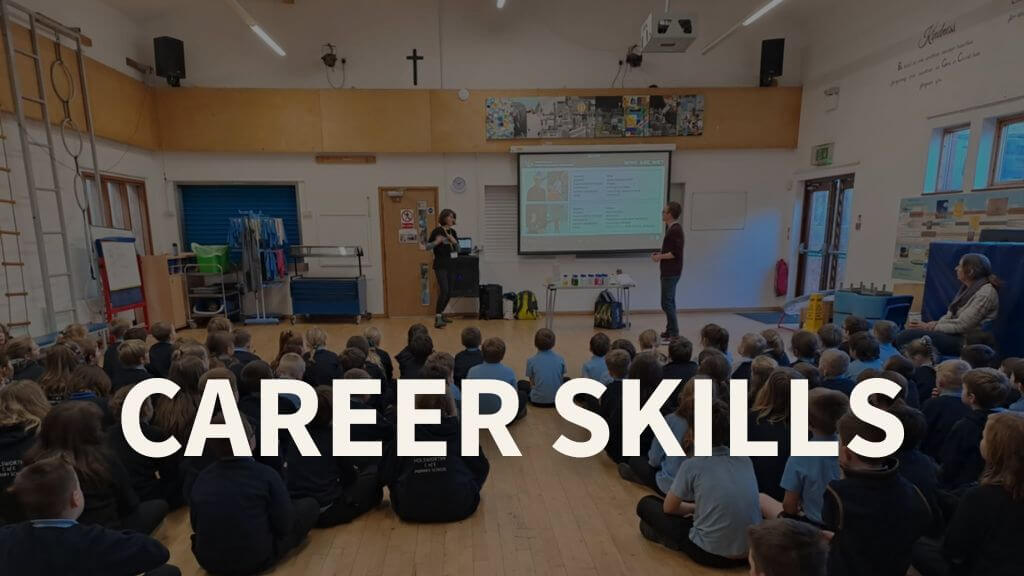
We offer 3 different workshops which shift the focus to understanding STEMM careers and the skills they require, for secondary school or A-level students.
What is research? Connecting students with what research is, career pathways, and an opportunity to explore examples of exciting current local research across various disciplines, including hands-on activities.
STEMM skills: Activities around teamworking, problem solving and presentation skills themed on a research or industry challenge.
Communication skills: An opportunity for students to develop their written communication, digital design and presentation skills relating to a locally relevant STEMM topic.
Custom workshops or events: If what you’re looking for isn’t listed here, we can design a custom event for your students. This might be related to our projects, or makes use of our wider expertise in public engagement – get in touch to discuss what we could do within your budget.
How we prioritise schools for our projects and activities
We’re trying to have the biggest impact we can with our limited resources – so for funded projects, we prioritise underserved audiences who would benefit most from taking part in our activities.
We try to prioritise schools and education settings located in areas that rank between 1-3 in the Indices of Multiple Deprivation (2025), or that have a wide catchment including more deprived areas, or are rurally isolated, along with:
– a higher proportion of students on free school meals (>30% FSM),
– low progression rates to higher education.
We also aim to prioritise schools and education settings that we have not previously worked with.
Stay tuned for updates & share your views:
Tackling eco-anxiety
We’ve worked with psychologists at the University of Exeter to provide resources on eco-anxiety, including a Shorts video series and infographic.
With these same researchers, we’ve also produced resources on maths anxiety – below!


Tackling maths anxiety
We’ve worked with psychologists at the University of Exeter to provide resources on maths anxiety for both students and teachers.
Find out what maths anxiety is, how to tackle it, and how teachers can support students at the link below.
Hello microbes!
This 1-lesson resource was designed for Key Stage 1 children to learn about microbes. It was designed in collaboration with Dr Nela Nikolic – a microbiologist at the University of Exeter, with funding from the Translational Research Exchange @ Exeter (TREE) and the Wellcome Trust.
We explore what microbes are, how we couldn’t live without them, how good microbes help us to fight bad microbes and how bacteria defend themselves against viruses.
The teacher guide and presentation are available at the link below.

Operation Earth
We were one of the science centres that took part in the Operation Earth programme, designed and funded by the Natural Environment Research Council (NERC) and Association for Science and Discovery Centres. Our Operation Earth tour was generously funded by the Adrian Swire Charitable Trust. All the digital resources for the project are freely available on the Operation Earth website, and the resources we’ve made (including the project’s impact report) are accessible via the link below.
Using light to detect cancer
In this 1-lesson, hands-on workshop, your students can learn how physicists at the University of Exeter are detecting oesophageal cancer, in their research funded by Cancer Research UK.
We explore simple harmonic oscillators, travelling waves, sound waves in solids, and electromagnetism. Most suitable for KS5.
All the learning resources, including a teacher guide, student worksheet and short demo guides, are available at the link below.


ESC Live: Energy and Waste
In this project funded by the IET & IMechE, we visited energy generation facilities, meeting engineers from across the South West and streamed the visits live to local schools!
We’ve produced resources for each episode – and you can access them all at the link below.
COVID-19 Vaccine: ask the experts
We produced a special set of YouTube videos where the experts answered questions from school students -including around how vaccines work and how they’re tested. Thanks to all the students and schools that have sent in their questions!
You can find the videos at the link below:
